
Our Guide to Corporate Team Building
This guide explains what corporate team building really is, and why it matters.
Corporate team building gets talked about a lot. Sometimes with enthusiasm, and sometimes with a collective sigh. Often, it’s without a shared understanding of what it’s meant to achieve. Done well, team building strengthens relationships, sharpens communication and creates the conditions staff need to perform at their best. Done badly, it becomes a tick-box exercise that people endure rather than enjoy. This guide explains corporate team building in full, showing what effective experiences looks like in practice, so that you can decide whether a team building event is the right fit for your organisation.
What is team building?
At its core, team building is about improving how people work together. That might mean building trust between colleagues, improving communication, breaking down silos, or helping individuals understand their role within a wider team. Corporate team building uses structured activities and shared experiences to create those improvements in a practical, engaging way. The key word is purposeful. Team building isn’t about filling time or forcing fun, it’s about creating experiences that help teams reflect, connect and collaborate more effectively back in the workplace.
What are the benefits of corporate team building?
We’ll explore the benefits in more depth in a separate article, but at a high level, effective corporate team building can:
- Improve communication and collaboration across teams
- Strengthen trust and working relationships
- Boost morale, motivation and engagement
- Support wellbeing and reduce workplace stress
- Improve overall performance and productivity
There’s solid evidence behind this. Gallup research consistently shows that highly engaged teams are more productive and resilient, with lower absenteeism and staff turnover. Team building isn’t a silver bullet, but it’s a powerful lever when used thoughtfully.
What does effective team building look like?
The difference between effective and ineffective team building usually comes down to intent and design.
Effective team building:
- Has clear objectives linked to real workplace challenges
- Feels inclusive and accessible to everyone involved
- Encourages reflection, discussion and shared problem-solving
- Is facilitated by experienced professionals who can adapt in the moment
Ineffective team building often looks very different. Activities feel disconnected from day-to-day work, participation feels forced and there’s little time to reflect or translate learning back into the workplace. The experience might be memorable, but it certainly won’t be meaningful.
As you already know, people don’t change behaviour because they were told to. They change when they understand why and feel supported to do things differently. And good team building creates that space.
Which is better – indoor, outdoor or virtual team building?
There’s no single ‘best’ format. The right choice depends on your objectives, your people and your practical constraints.
Indoor team building works well when:
- You want a controlled environment
- Time is limited
- Activities need to focus on discussion, strategy or communication
Virtual team building can be effective for:
- Remote or hybrid teams
- Short, regular touchpoints
- Maintaining connection across locations
But outdoor team building brings something extra.
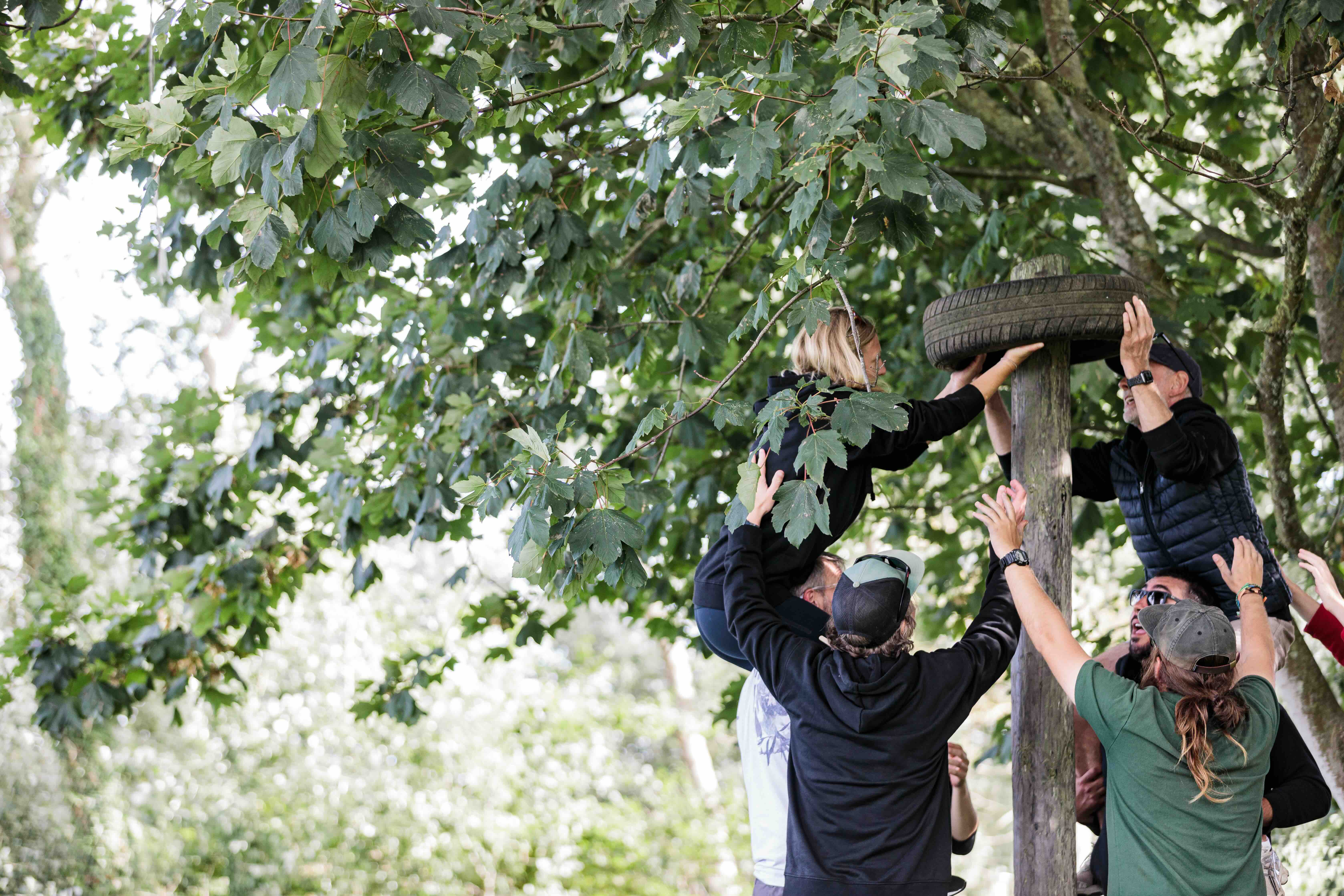
Being outdoors naturally shifts perspective. It removes everyday distractions, encourages problem-solving and levels hierarchies. Outdoor activities also promote wellbeing and resilience, which is why they’re so effective for teams under pressure. At Skern Training and Skills, outdoor team building is a core part of what we do because it combines challenge, collaboration and reflection in a way that sticks.
3 tips for planning a team building event
You don’t need a full project plan to get started, but a bit of clarity upfront makes all the difference:
- Start with your purpose: Ask what you actually want to improve (communication, trust, leadership, morale).
- Know your people: Consider accessibility, confidence levels and group dynamics. Inclusion isn’t optional.
- Work with experienced providers: Skilled facilitation turns activities into learning, not just experiences.
FAQs
Are corporate team building events tax deductible?
In many cases, yes, particularly when events are clearly linked to business purposes such as staff development or training. Tax treatment can vary, so it’s always best to check with your accountant or HMRC guidance.
How often should we organise a corporate team building event?
There’s no fixed rule. Many organisations plan one or two larger events each year, supported by smaller activities or development days. The key is consistency rather than one-off gestures.
How do we measure the success of a team building event?
Look beyond immediate feedback. Improvements in communication, engagement, collaboration and morale over time are better indicators of success.
Making corporate team building work
Corporate team building works best when it’s intentional, inclusive and aligned with real workplace needs. It’s not about grand gestures, it’s about creating meaningful experiences that help people work better together. Whether you’re looking to reconnect a team, boost morale or support performance, corporate team building can play a powerful role when it’s designed with care. At Skern Training and Skills, we’re here to guide you, support you and handle the practical challenges, so you can focus on outcomes. Explore how our team building and corporate training programmes can support your organisation and take the next step with confidence.


